










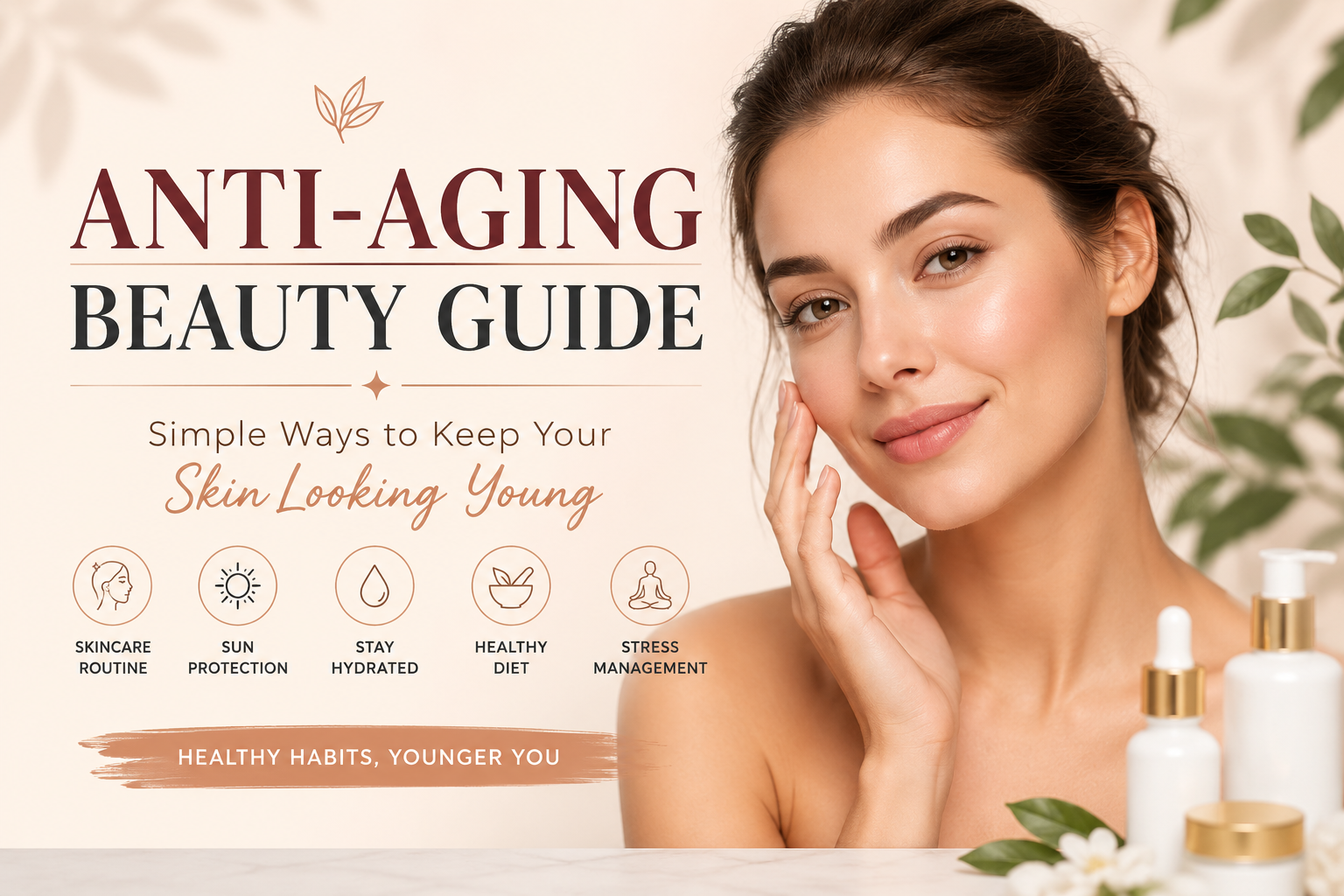
Aging is a natural part of life, but many people want to keep their skin looking healthy, smooth, and youthful for as long as possible. While no product can stop aging completely, the right skincare habits and healthy lifestyle choices can help reduce the appearance of fine lines, wrinkles, and other signs of aging.
In this anti-aging beauty guide, you will learn simple and effective ways to maintain youthful-looking skin and improve your overall skin health.
What Causes Skin Aging?
As we grow older, our skin naturally changes. The body produces less collagen and elastin, which are proteins that keep the skin firm and flexible. Over time, the skin becomes thinner, drier, and less elastic.
Several factors can speed up the aging process, including:
- Too much sun exposure
- Smoking
- Poor diet
- Lack of sleep
- Stress
- Dehydration
- Environmental pollution
Understanding these causes can help you make better choices for your skin.
Follow a Daily Skincare Routine
A good skincare routine is one of the most important steps in preventing premature aging.
Cleanse Your Skin Gently
Wash your face twice a day with a gentle cleanser. This removes dirt, oil, and makeup without damaging the skin’s natural barrier.
Avoid harsh soaps that can dry out your skin and make wrinkles more noticeable.
Use a Moisturizer Every Day
Moisturizing helps keep your skin hydrated and smooth. Dry skin can make fine lines and wrinkles appear more visible.
Choose a moisturizer that suits your skin type and contains ingredients such as:
- Hyaluronic acid
- Glycerin
- Ceramides
- Vitamin E
Apply Sunscreen Daily
Sun exposure is one of the biggest causes of premature aging. UV rays can damage collagen and lead to wrinkles, dark spots, and sagging skin.
Use a broad-spectrum sunscreen with SPF 30 or higher every day, even when it is cloudy.
Eat Foods That Support Healthy Skin
What you eat can have a major impact on your skin’s appearance.
Include Antioxidant-Rich Foods
Antioxidants help protect the skin from damage caused by free radicals.
Good sources include:
- Berries
- Oranges
- Spinach
- Tomatoes
- Green tea
- Nuts
Get Enough Healthy Fats
Healthy fats help keep your skin soft and hydrated.
Foods rich in healthy fats include:
- Avocados
- Salmon
- Walnuts
- Olive oil
- Chia seeds
Stay Hydrated
Drinking enough water helps maintain skin elasticity and hydration.
Try to drink water throughout the day and limit sugary drinks whenever possible.
Get Enough Sleep
Sleep is often called “beauty sleep” for a good reason.
During sleep, the body repairs damaged skin cells and produces new collagen. Lack of sleep can lead to:
- Dull skin
- Dark circles
- Fine lines
- Increased stress hormones
Most adults should aim for 7 to 9 hours of quality sleep each night.
Avoid Smoking and Limit Alcohol
Smoking reduces blood flow to the skin and damages collagen and elastin. This can lead to early wrinkles and a dull complexion.
Excessive alcohol consumption can also dehydrate the skin and make it look older.
Avoiding smoking and limiting alcohol can greatly improve your skin’s long-term health.
Use Anti-Aging Ingredients
Many skincare products contain ingredients that help reduce visible signs of aging.
Retinol
Retinol is a form of Vitamin A that helps improve skin texture and reduce fine lines.
It can also stimulate collagen production and improve skin tone.
Vitamin C
Vitamin C is a powerful antioxidant that helps brighten the skin and reduce dark spots.
It also supports collagen production and protects against environmental damage.
Hyaluronic Acid
Hyaluronic acid attracts moisture and helps keep the skin plump and hydrated.
This can make wrinkles appear less noticeable.
Exercise Regularly
Regular exercise improves blood circulation, which helps deliver oxygen and nutrients to the skin.
Benefits of exercise include:
- Healthier complexion
- Better skin tone
- Reduced stress
- Improved overall wellness
Even a daily 30-minute walk can support healthy skin.
Manage Stress
Chronic stress can negatively affect your skin and speed up the aging process.
High stress levels may lead to:
- Breakouts
- Dry skin
- Fine lines
- Dull appearance
Simple stress-management techniques include:
- Meditation
- Deep breathing
- Yoga
- Reading
- Spending time outdoors
Taking care of your mental health can benefit your skin as well.
Protect Your Skin from Environmental Damage
Pollution and environmental toxins can contribute to premature aging.
You can protect your skin by:
- Cleansing your face daily
- Wearing sunscreen
- Using antioxidant-rich skincare products
- Avoiding excessive exposure to polluted environments
These simple habits help keep your skin healthy and youthful.
Conclusion
Looking young is not about achieving perfection. It is about maintaining healthy skin through consistent care and healthy lifestyle choices. A daily skincare routine, proper nutrition, hydration, sun protection, quality sleep, and stress management can all help reduce signs of aging and keep your skin looking its best.
Remember that aging is natural, and the goal should be healthy, glowing skin at every stage of life. By following these simple anti-aging beauty tips, you can enjoy smoother, healthier, and more youthful-looking skin for years to come.
Frequently Asked Questions (FAQs)
1. What is the best age to start using anti-aging skincare products?
Many skincare experts recommend starting preventive anti-aging care in your mid-20s to early 30s. Sunscreen and moisturizer should be used at any age.
2. Can sunscreen really prevent wrinkles?
Yes. Daily sunscreen use helps protect the skin from UV damage, which is one of the main causes of wrinkles and premature aging.
3. Which anti-aging ingredient is most effective?
Retinol is one of the most effective anti-aging ingredients because it helps improve skin texture, reduce wrinkles, and boost collagen production.
4. Does drinking water reduce wrinkles?
Water helps keep the skin hydrated and healthy. While it may not remove wrinkles, proper hydration can make the skin look smoother and more refreshed.
5. Can natural remedies help with anti-aging?
Some natural remedies, such as aloe vera, green tea, and antioxidant-rich foods, may support healthy skin. However, results are usually best when combined with a proper skincare routine and sun protection.


