










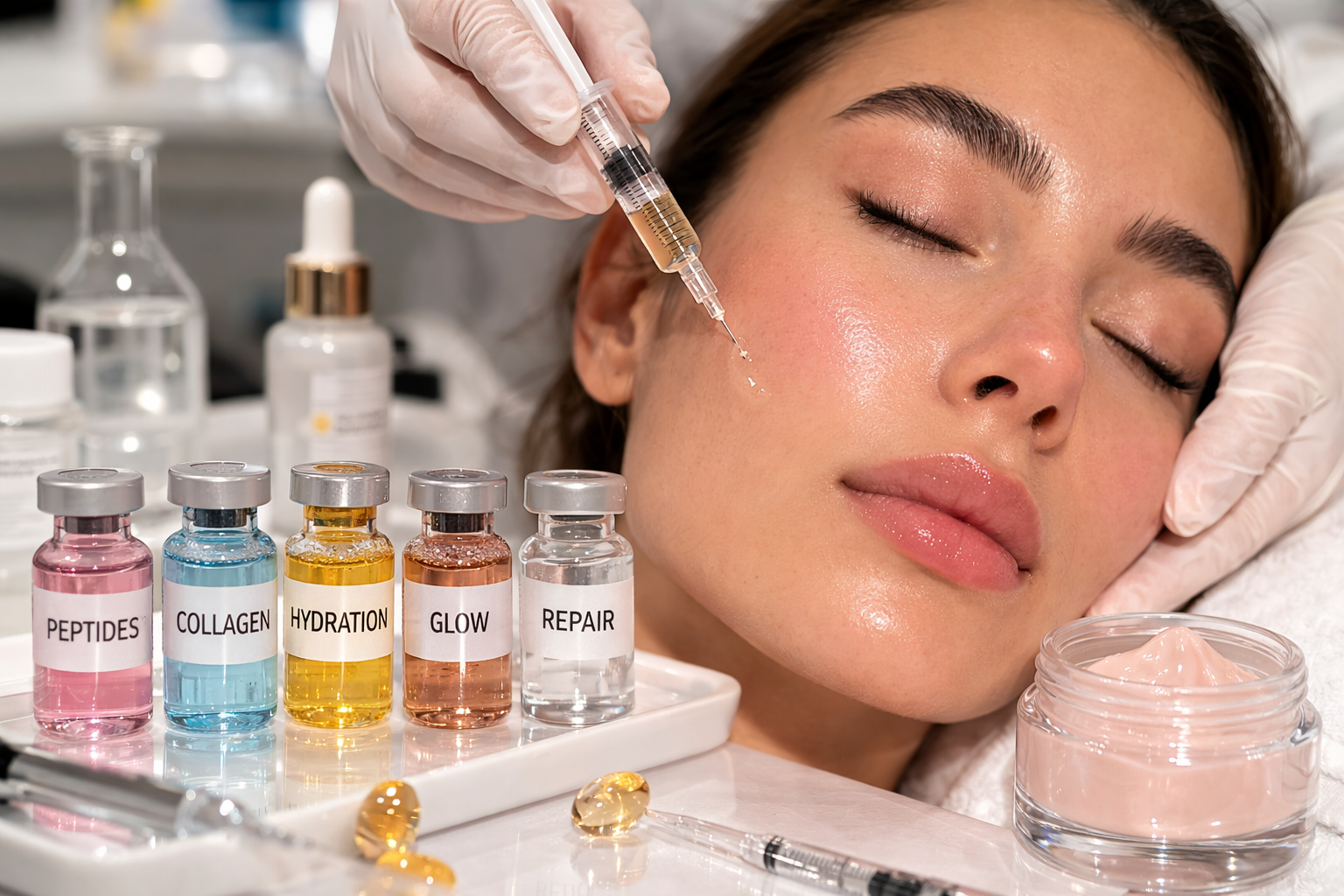
In the ever-evolving world of aesthetic treatments, a new buzzword is making rounds in dermatology clinics and wellness studios alike: peptide stacking. Marketed as a cutting-edge approach to skin rejuvenation and overall wellness, the trend claims to deliver multiple benefits from firmer skin to improved healing through a carefully curated combination of injectable peptides.
But while the promise of “bouncier skin” sounds appealing, experts say the science and expectations around peptide stacking deserve a closer look.
What Is Peptide Stacking?
Peptides are short chains of amino acids that function as signaling molecules in the body. In skincare and medicine, certain peptides are used to stimulate collagen production, promote tissue repair, and support cellular communication.
Peptide stacking refers to the practice of combining multiple peptide compounds in a single treatment plan. Instead of using one peptide at a time, practitioners administer a tailored mix designed to target different biological pathways simultaneously.
Supporters of the trend claim the approach can amplify results by addressing several concerns at once—such as skin elasticity, inflammation, hydration, and cellular regeneration.
The Appeal of a “Multi-Benefit” Treatment
The concept of stacking peptides taps into a broader shift in the beauty industry toward holistic, inside-out treatments. Rather than focusing solely on topical skincare, more consumers are turning to injectables and supplements that promise deeper, systemic effects.
In aesthetic clinics, peptide stacks are often marketed as a way to achieve smoother, firmer skin while also supporting broader wellness goals such as faster recovery, improved metabolism, or better sleep.
For clients looking to simplify their routines, the idea of one treatment delivering multiple benefits can be especially appealing.
The Science Behind the Claims
Some peptides used in these treatments have shown promising results in research settings. Certain compounds may stimulate collagen production, while others may help reduce inflammation or accelerate tissue repair.
However, dermatologists caution that the effectiveness of combining several peptides together has not been studied as extensively as single-peptide therapies.
Because peptide stacking is relatively new in the aesthetic space, clinical evidence supporting its long-term benefits—and potential risks—remains limited. Much of the enthusiasm surrounding the practice comes from early-stage research or anecdotal patient results.
Proceeding With Caution
Medical professionals stress that injectable peptide treatments should only be administered by qualified practitioners who understand both the science and the potential side effects.
Peptides can influence multiple biological systems, meaning that stacking several together may lead to unpredictable outcomes if not carefully managed.
Patients interested in these treatments are encouraged to ask questions about the specific peptides being used, the evidence behind them, and whether the protocol has been clinically tested.
A Trend Still Taking Shape
Peptide stacking reflects a growing intersection between cosmetic dermatology, longevity science, and wellness culture. While the concept holds intriguing possibilities, experts say it’s still too early to consider it a universal solution for youthful skin.
For now, peptide stacking remains one of the beauty industry’s most talked-about emerging treatments—offering a glimpse into how the future of skincare may combine science, aesthetics, and personalized medicine.


