






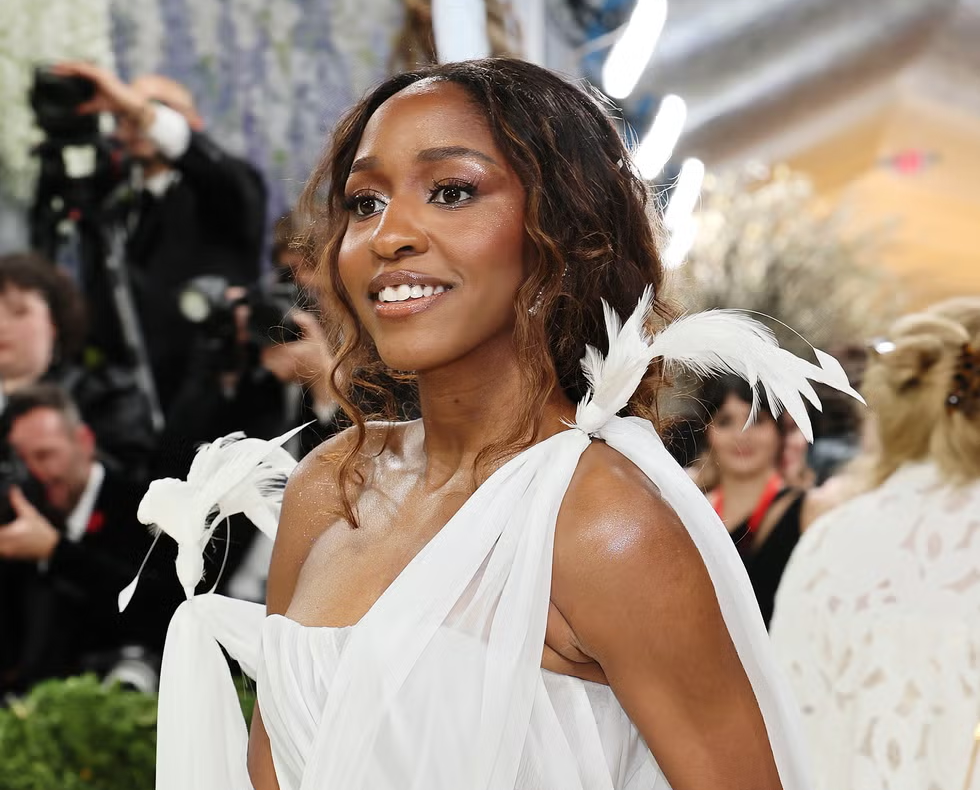
At the Met Gala 2026, where many leaned into spectacle through exaggeration, Ayo Edebiri took a more nuanced route—delivering a look that relied on restraint, material intelligence, and quiet control.
Draping as Narrative
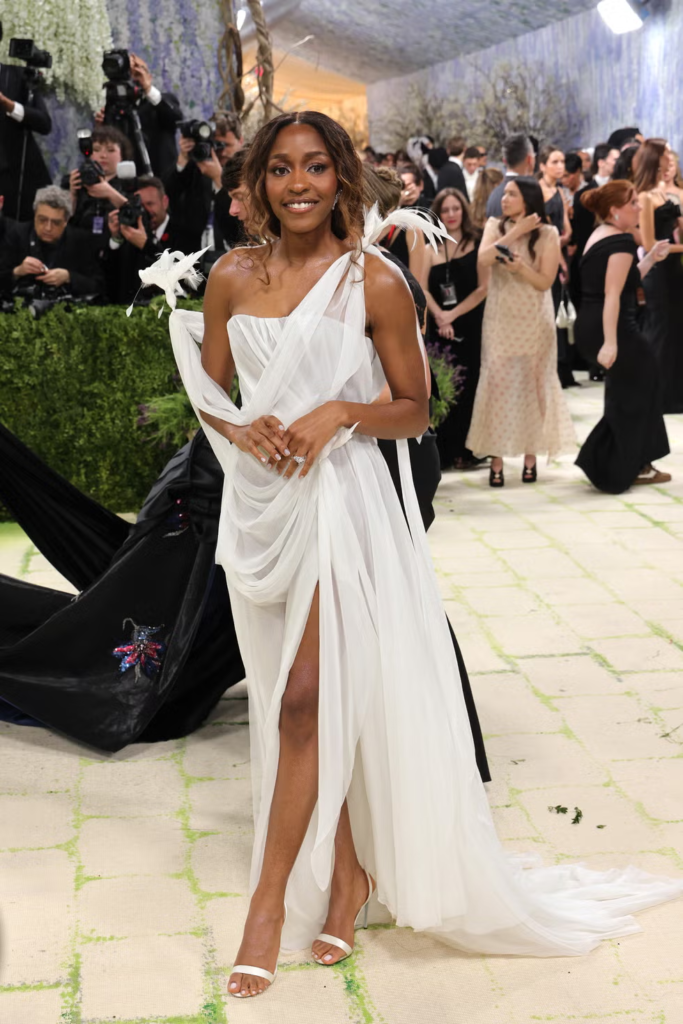
Wearing a custom design by Chanel under the direction of Matthieu Blazy, Edebiri’s gown explored draping not just as a technique, but as storytelling.
The strapless white dress was constructed with layers of gossamer fabric that wrapped and flowed around the body in soft, continuous motion. Rather than imposing structure, the garment responded to movement—creating a dynamic silhouette that shifted with every step.
This approach aligned precisely with the evening’s theme, “Costume Art,” where the focus extended beyond clothing into how garments interpret and reshape the body.
Controlled Ethereality
What distinguished this look was its discipline. Ethereal fashion often risks becoming indistinct, but here, every element was intentional.
Feathered accents emerging from the straps introduced subtle punctuation—interrupting the softness with texture and dimension. The result was a calibrated contrast: fluid fabric grounded by delicate structural details.
Even the styling followed this logic. Minimal jewelry and tonal accessories ensured that nothing disrupted the visual continuity of the look.

A Study in Evolution
Edebiri’s Met Gala trajectory reveals a methodical evolution. Her earlier appearances leaned into narrative symbolism and tailored contrasts, but this year marked a shift toward reduction.
Instead of layering references, she distilled her approach—focusing on silhouette, material, and proportion. It’s a progression that reflects growing confidence not just in fashion, but in how to occupy space within it.
Why It Resonated
In a room full of high-concept interpretations, Edebiri’s look stood out because it didn’t compete for attention—it commanded it through coherence.
The gown didn’t attempt to overwhelm or shock. Instead, it invited closer inspection, rewarding attention with detail and precision.
That’s what made it effective: it understood that fashion as art doesn’t always need volume or spectacle. Sometimes, it’s about control—about knowing exactly how much to say, and when to stop.


