









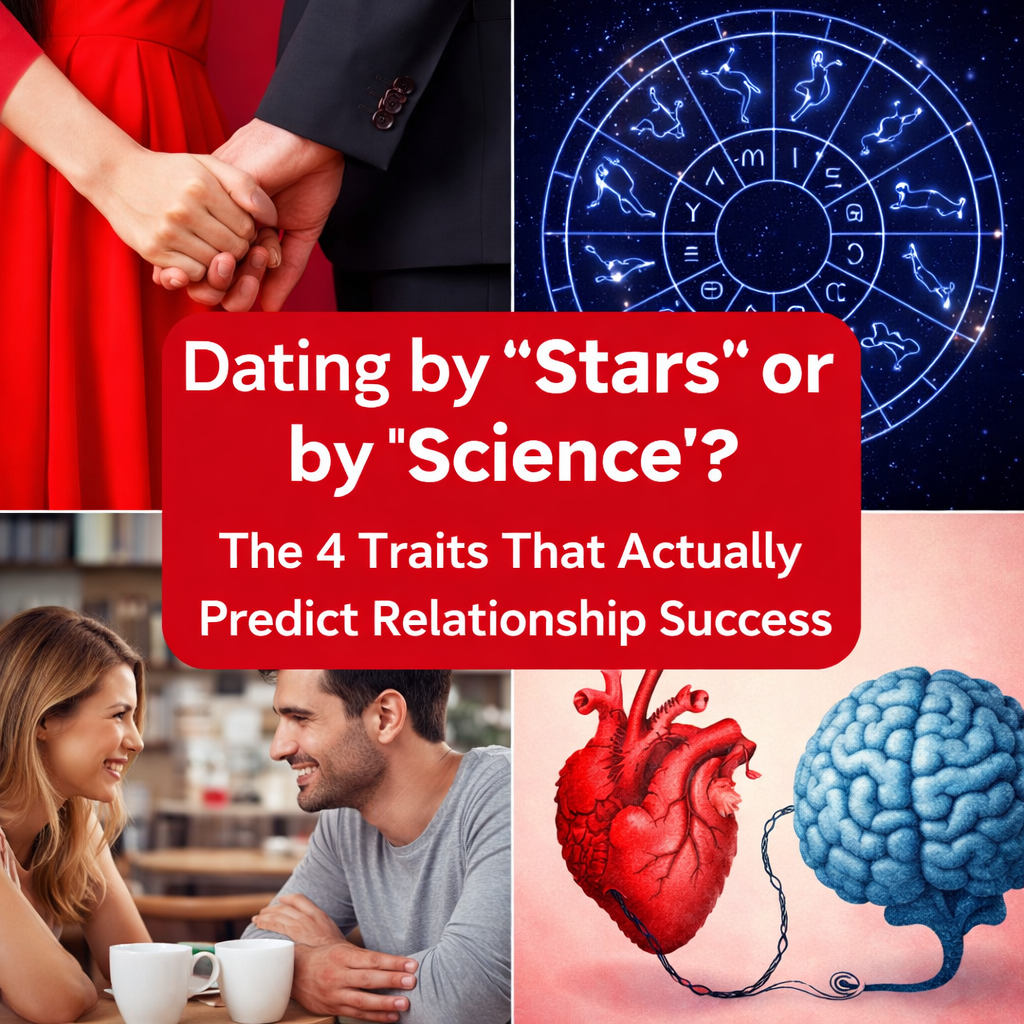
For generations, people have turned to astrology to decode romantic compatibility. Birth charts, zodiac pairings, and planetary alignments often shape first impressions long before a first date begins. But while star signs may offer entertainment value, relationship psychologists argue that long-term compatibility depends on measurable behavioral traits — not birthdays.
So if you’re serious about finding a lasting relationship, it may be time to look beyond the zodiac and toward science-backed qualities that truly matter.
The Astrology Illusion
Astrology thrives because it feels personal and intuitive. Reading that your sign is “passionate but stubborn” can create instant validation. But psychologists explain that this effect — known as the Barnum effect — happens when people accept broad descriptions as uniquely accurate.
Compatibility, however, isn’t determined by whether two people are fire signs or water signs. It’s shaped by patterns of communication, emotional regulation, shared values, and relational habits. While astrology can spark conversation, it cannot reliably predict emotional stability or long-term partnership success.
What Research Actually Shows
Relationship science consistently highlights four core traits that strongly predict romantic stability and satisfaction. These traits appear across cultures and demographics, regardless of zodiac alignment.
1. Emotional Regulation
How does someone respond to stress, disagreement, or disappointment? Emotional regulation — the ability to manage reactions without escalation — is foundational to healthy partnerships.
Couples who can pause, reflect, and communicate calmly during conflict are significantly more likely to maintain long-term satisfaction. Astrology doesn’t determine temperament. Emotional intelligence does.
2. Secure Attachment
Attachment style plays a major role in romantic success. Individuals with secure attachment patterns feel comfortable with intimacy while maintaining independence. They trust their partners and communicate needs directly.
In contrast, anxious or avoidant attachment styles can create cycles of insecurity or emotional distance. Understanding attachment patterns offers far more predictive power than comparing horoscopes.
3. Shared Core Values
Compatibility is less about identical hobbies and more about aligned life priorities. Conversations about finances, family expectations, career goals, and personal growth reveal long-term alignment.
Shared values influence daily decision-making and future planning. While two Leos may share confidence, that doesn’t guarantee agreement on lifestyle, commitment, or long-term vision.
4. Consistency and Reliability
Attraction often focuses on chemistry — but long-term relationships depend on consistency. Does this person follow through? Do their actions match their words? Reliability builds trust, which forms the backbone of emotional safety.
Scientific studies repeatedly show that dependable behavior predicts relationship longevity more accurately than personality labels.
Moving From Fantasy to Framework
Astrology can be fun. It can even serve as an icebreaker. But when evaluating a partner, focusing on evidence-based relational traits provides clarity.
Instead of asking, “What’s your sign?” consider asking:
- How do you handle conflict?
- What does commitment mean to you?
- How do you express affection?
- What are your long-term goals?
These questions reveal emotional compatibility in ways star charts cannot.
The Bottom Line
Romantic success isn’t written in the stars — it’s built through behavior. While zodiac signs may spark curiosity, sustainable relationships depend on emotional intelligence, secure attachment, aligned values, and reliability.
If you’re dating with intention, science offers a stronger compass than astrology.


