










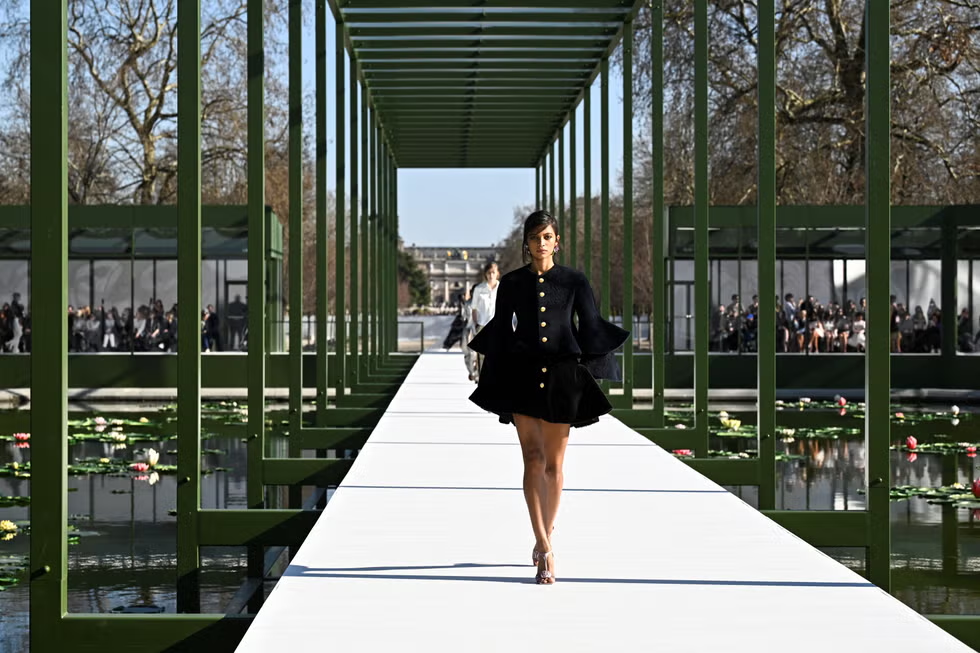
Paris Fashion Week delivered one of its most memorable moments when Dior unveiled its Fall/Winter 2026 ready-to-wear collection at the historic Jardin des Tuileries. Under clear skies and warm early-spring sunshine, the show marked another major step in Jonathan Anderson’s evolving vision for the iconic French fashion house.
Since taking on the role of creative director, Anderson has been steadily redefining Dior’s aesthetic—balancing the brand’s legendary heritage with a fresh and often daring perspective. His Fall/Winter 2026 collection demonstrated exactly how that balance can work, blending tradition, artistry, and modern wearability.
The inspiration for the show came directly from its location. The Tuileries gardens, a beloved Paris landmark dating back to the 14th century, provided both historical context and visual direction. Known for its manicured landscapes, tree-lined paths, and iconic green metal chairs where visitors gather to relax or socialize, the park has long symbolized Parisian elegance. It also connects deeply to Dior’s history, reflecting founder Christian Dior’s lifelong love for flowers and gardens.

To echo this theme, the runway itself was transformed into a garden-inspired setting. Designed in a hexagonal layout, the stage surrounded pools decorated with lily pads—a subtle nod to Claude Monet’s famous Water Lilies series housed at the nearby Musée de l’Orangerie. A single catwalk ran through the center while guests sat on benches inspired by the park’s signature chairs, creating the feeling of a refined promenade through a romantic Parisian garden.
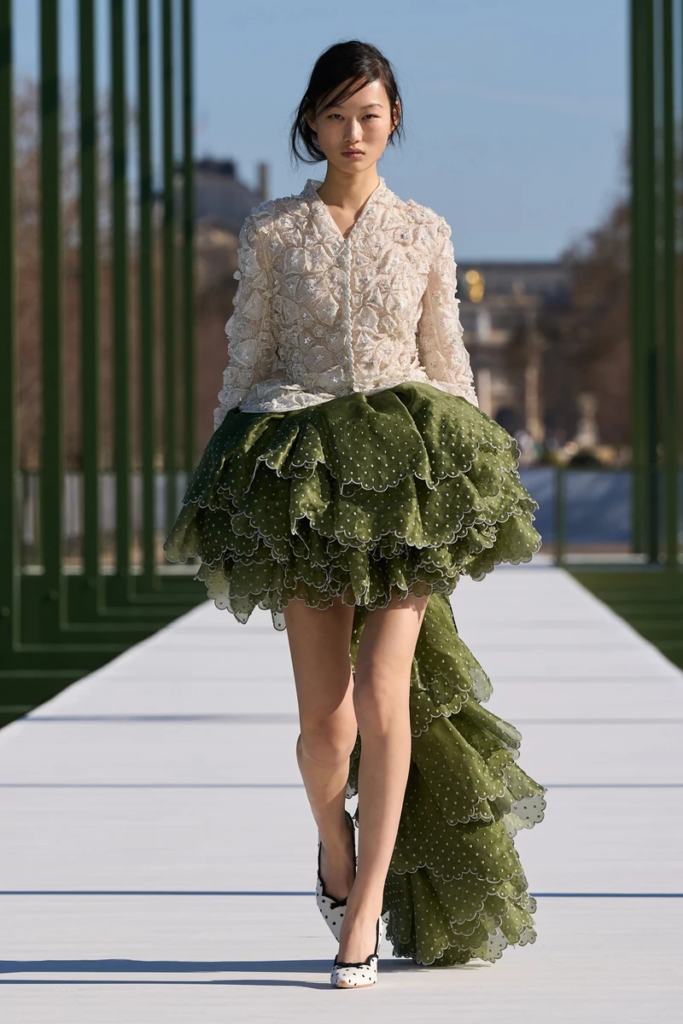
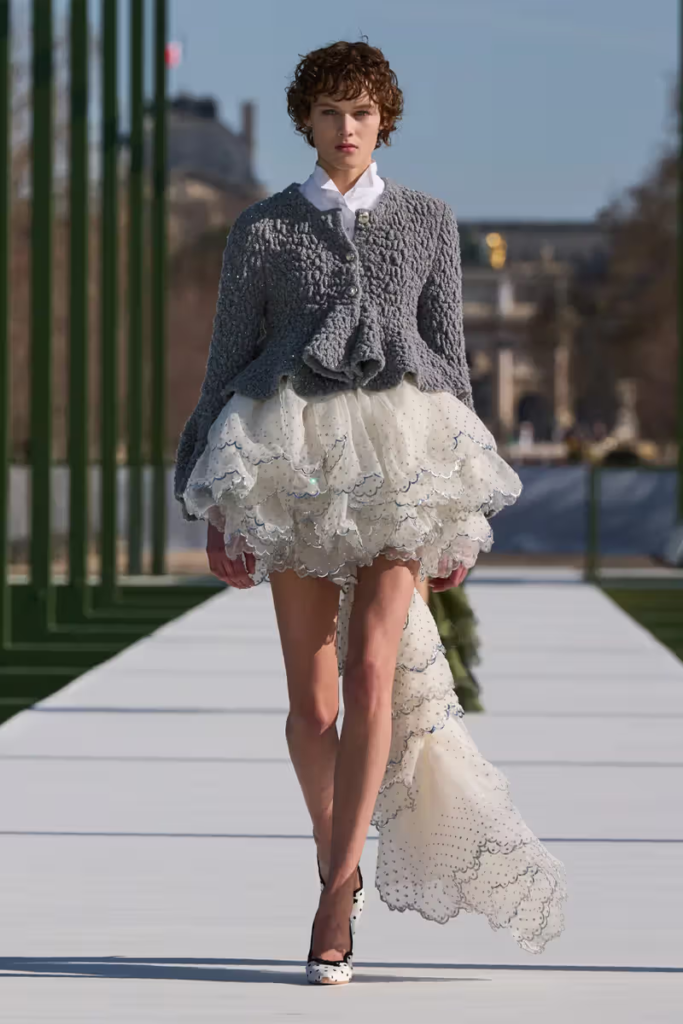
The show opened with three variations of a striking look that immediately captured the audience’s attention. Each model wore a cropped version of Dior’s iconic Bar jacket paired with a tiered Swiss-dot mini skirt that featured a trailing ruffled train. The look honored Dior’s classic tailoring while introducing a playful, contemporary silhouette.
As the collection unfolded, Anderson continued to explore historical references while pushing them into modern territory. Voluminous skirts gave way to embroidered balloon trousers inspired by early twentieth-century designer Paul Poiret. Dramatic frock coats lined with shearling added texture and warmth, while draped waistlines softened the silhouettes with romantic elegance.
One of the collection’s most notable moments was Anderson’s reinterpretation of Dior’s famous 1949 “Junon” gown. Instead of recreating the dress directly, he borrowed its distinctive petal-like scalloped shapes and transformed them into an asymmetrical denim skirt—blending couture history with contemporary fashion.
Despite the artistry on display, the collection remained remarkably wearable. Alongside the dramatic runway pieces, Anderson presented practical wardrobe staples such as tailored trousers, scarf-detailed shirts, suede Chelsea boots, and simple straight-cut denim. These everyday pieces were elevated through thoughtful styling, often paired with delicate Bar jackets or layered with airy tulle details.
The show concluded with a striking black evening coat inspired by 1950s silhouettes. Textured and elegant, it served as a confident closing statement for a collection that balanced craftsmanship, creativity, and commercial appeal.
More than just a runway presentation, Anderson’s Dior collection captured a mood—one that celebrated beauty, emotion, and the simple joy of stepping outside and experiencing the world. By combining Dior’s rich heritage with bold new ideas, Anderson proved that the legendary house is not only honoring its past but also confidently shaping its future.


