


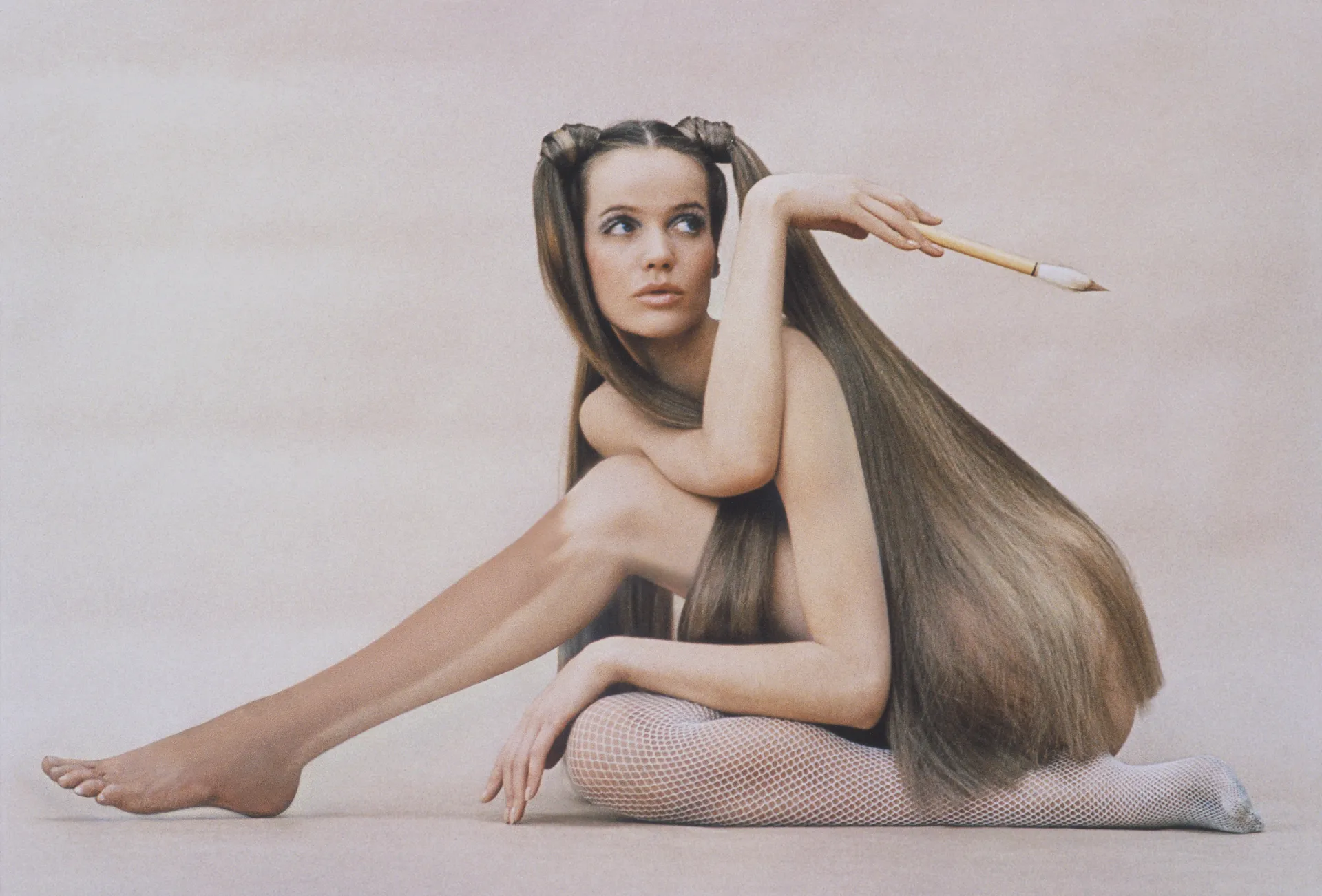
Fashion has always celebrated people who bring something different to the industry. Some models become famous for their beauty, while others change the way people understand fashion, photography, and art. Veruschka was one of those rare personalities. She was not just a supermodel but also an artist, actress, and creative inspiration who helped redefine the fashion world.
Born as Vera Gottliebe Anna Gräfin von Lehndorff-Steinort, Veruschka became one of the most recognizable fashion figures of the 1960s. Her dramatic poses, unique personality, and ability to transform herself made her a global fashion icon.
Following the news of her death at the age of 87 in November 2026, designers, photographers, models, and fashion publications have been remembering her extraordinary contribution to the industry. Her influence continues to inspire new generations of creative professionals.
Vogue+2
Who Was Veruschka? The Woman Behind the Fashion Legend
Veruschka was born on May 14, 1939, in Königsberg, East Prussia, which is now Kaliningrad, Russia. Her childhood was deeply affected by World War II. Her father, Count Heinrich von Lehndorff-Steinort, was executed in 1944 because of his involvement in the failed plot to assassinate Adolf Hitler.
Before entering the fashion industry, she studied art. Her creative background later became an important part of her modeling career.
She was discovered in Florence, Italy, in 1959. Initially, her height and unconventional appearance made it difficult for her to find opportunities. However, her unique look eventually became her biggest strength.
After developing her career in Italy, she returned to New York in 1964. Her association with influential fashion editor Diana Vreeland helped establish her position in the international fashion industry.
Vogue+1
How Veruschka Changed the Fashion Industry
During the 1960s, fashion photography was becoming more creative and experimental. Veruschka brought a completely different energy to fashion campaigns and magazine editorials.
She was known for her long limbs, expressive movements, dramatic facial expressions, and ability to create powerful images through body language.
Unlike traditional modeling, which often focused on presenting clothing, Veruschka treated every photograph as a form of artistic storytelling.
She appeared on 13 American Vogue covers and worked with some of the most respected photographers of her generation, including:
- Richard Avedon
- Irving Penn
- Franco Rubartelli
- Horst P. Horst
- David Bailey
Her photographs became important references in fashion history. She showed that a model could be much more than someone wearing designer clothing. A model could also become an active creative force behind an image.
Vogue+1
Richard Avedon and the Power of Creative Photography
One of the most important professional relationships in Veruschka’s career was with American photographer Richard Avedon.
Their creative partnership produced some of the most memorable fashion photographs of the 1960s.
Their famous 1967 Vogue editorial demonstrated how movement, imagination, and personality could transform fashion photography. Veruschka jumped, moved, and experimented with different poses, creating photographs that looked more like artistic performances than traditional fashion advertisements.
Avedon admired her ability to bring his creative ideas to life. Their collaboration remains an important example of what can happen when a photographer and model share a strong artistic vision.
The renewed attention around Ron Howard’s documentary Avedon has also brought fresh interest in their historic creative partnership.
Vogue+1
Veruschka’s Relationship With Fashion Designers
Veruschka’s influence was not limited to photography. She also became an important muse for designers who wanted to communicate individuality, elegance, and confidence.
Her memorable appearance in an Yves Saint Laurent safari jacket photographed by Franco Rubartelli in 1968 remains an iconic fashion image.
She understood how to make clothing look powerful without losing its artistic character.
Her relationship with fashion continued across different decades. She returned to the runway for Chanel in 1994 and later walked for Giles Deacon’s Spring/Summer 2011 show at the age of 71.
In 2017, Acne Studios also featured her in its Resort 2018 lookbook. These appearances demonstrated that great fashion personalities do not lose their influence simply because trends or generations change.
British Vogue+1
Beyond Modeling: Veruschka as an Artist and Actress
What made Veruschka particularly special was her interest in exploring creativity beyond modeling.
In the 1970s, she worked with artist Holger Trülzsch on experimental body-painting photography. Their work transformed her body into different visual forms, allowing her to blend into natural surroundings, buildings, and artistic backgrounds.
This approach challenged traditional ideas about beauty and photography.
Veruschka also made a memorable appearance in Michelangelo Antonioni’s 1966 film Blow-Up. The film introduced her to a wider audience beyond fashion magazines.
She also supported social change. In 1971, she participated in a campaign published by German magazine Stern that called for abortion law reform.
Her career demonstrated that fashion personalities could use their public presence to explore art, culture, and important social issues.
Vogue+1
Why Fashion Is Paying Tribute to Veruschka in 2026
The fashion industry’s renewed tributes to Veruschka are about more than remembering a famous model. They recognize a creative personality who changed the relationship between fashion, photography, and performance art.
Contemporary fashion often celebrates individuality, self-expression, and diversity. These ideas were already visible in Veruschka’s approach to modeling decades ago.
Her ability to reinvent herself also offers an important lesson to modern models and designers. Fashion is not only about following trends. It is about developing a personal identity and expressing ideas through creativity.
Fashion personalities and fellow models have remembered her artistic talent, kindness, humor, and unique personality. Their tributes show that her influence extended beyond the photographs that made her famous.
Vogue+1
The Lasting Legacy of a Fashion Icon
Veruschka’s story reminds us that true influence is not measured only by magazine covers, runway appearances, or commercial success.
She helped introduce a more artistic approach to modeling and inspired photographers, designers, artists, and fashion lovers around the world.
Her work continues to offer inspiration to people who believe fashion should be creative, expressive, and personal.
As the fashion industry pays tribute to Veruschka in 2026, one message remains clear: some personalities become famous because they follow fashion, while others become legends because they change it.
Veruschka belongs to the second category. Her name will remain an important part of fashion history.
