


Araya Artisan Chocolate combines Premium single-origin Venezuelan chocolate, layered fillings and traditional European techniques to create confections where flavor, texture and craftsmanship meet.
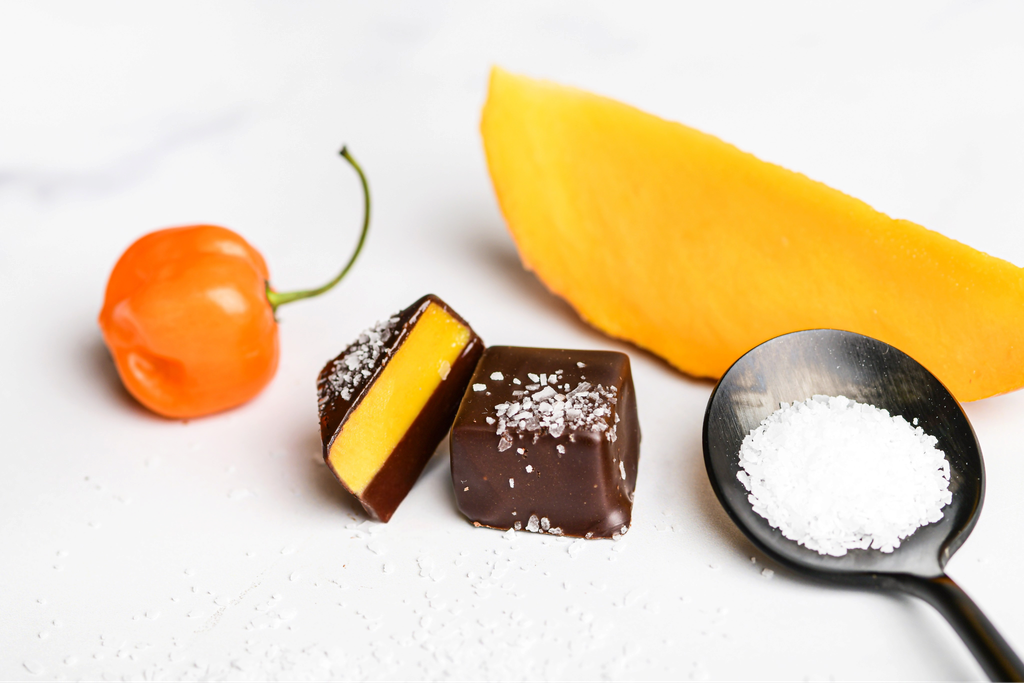
A mango chocolate sounds simple until the habanero shows up. At Araya Artisan Chocolate, the Mango Habanero bonbon pairs chocolate mango mousse with a separate layer of dark chocolate ganache made with fresh Mexican habanero, finished with salt. Sweetness, heat and bitterness unfold within a bite that also moves through the textures of chocolate shell, mousse and ganache.
Those contrasts give chocolatiers another way to make a familiar treat feel distinctive. With 44% of consumers highly drawn to unexpected textures in chocolate confectionery, rising to 52% among Gen Z and millennials, what happens between the shell and the center can matter as much as the flavor on the label.
For Araya, which has been making handcrafted confections in Houston since 2010, the finished bonbon is the sum of those individual decisions. The company combines premium Venezuelan chocolate with ingredients sourced from around the world and traditional French and Belgian confectionery techniques. At its Houston Historic Heights production kitchen, small batches allow attention to each component, from the filling beneath the shell to the final coating and finishing details.
For owner Giusse Sicoli, who left her career in dentistry to run the business full-time, preserving that attention to detail has remained central to Araya’s identity. The challenge isn’t simply choosing good base chocolate. It’s knowing what to do with it.
The Difference Between Making Chocolate and Making Chocolates
There is a distinction in the chocolate industry that often gets lost on consumers: producing chocolate from cacao beans and creating finished confections from chocolate are two different crafts.
Bean-to-bar producers handle steps such as roasting cacao, grinding the beans and refining chocolate. Araya works with chocolate that has already been produced, transforming it into bonbons, truffles and other fine confections through a combination of fillings, textures and traditional techniques.
That still leaves plenty of room for technical decisions.
Take the difference between Araya’s Venezuela 70% and Venezuela 41%. The former emphasizes a dark chocolate ganache made with 70% Venezuelan chocolate, delivering a more pronounced cocoa character. The latter uses milk chocolate with caramel and nut notes, producing a softer, sweeter profile.
Neither requires an elaborate list of additional ingredients. The chocolate itself provides the experience.
Other pieces are more complicated. A dark chocolate shell might enclose a fruit mousse, while a milk chocolate ganache can carry nuts, spices or caramel. Different fillings melt at different rates, and the coating determines how a piece feels before its center reaches the palate.
Sicoli explained in a recent interview, “To me, artisan means small batches, handcrafted, attention to details and no preservatives. Something that transmits love, passion and care”.
The work is less about adding complexity for its own sake than making the ingredients behave together. A chocolate that tastes excellent on its own might overwhelm a delicate fruit filling. A softer coating could change the contrast with the center. The choices are small, but their effects become obvious once the chocolate is eaten.
Building Flavor Through Contrasts
Some of Araya’s most distinctive pieces feel closer to a restaurant dessert than a traditional chocolate assortment.
The Strawberry Balsamic bonbon pairs dark chocolate ganache with strawberries and a reduction of balsamic vinegar. The fruit brings sweetness and brightness; the vinegar adds sharper, more concentrated acidity that cuts through the richness of the chocolate. It’s a familiar sweet-and-sour idea applied to an unexpected setting.
Passion Fruit takes a different route. A white chocolate passion fruit mousse sits inside a dark chocolate shell. The mousse has a softer, fruit-forward character, while the exterior introduces a deeper cocoa note that keeps the combination from becoming one-dimensional.
Other pieces use spice instead of acidity. Blueberry Cardamom combines blueberry chocolate mousse with the warm, aromatic character of cardamom. Cinnamon & Walnuts uses a milk chocolate ganache with cinnamon and roasted walnuts, then encloses the mixture in dark chocolate. The nuts introduce texture alongside the spice, giving the filling something more than sweetness alone.

These aren’t identical centers with different ingredients stirred in. The choice of chocolate, filling and texture changes according to the combination.
Mango Habanero offers perhaps the clearest example of the balancing act. Fruit sweetness, pepper heat, salt and cocoa bitterness are all present and competing. Push any one too far and the others begin to disappear. The difficulty with an unusual flavor isn’t necessarily coming up with the idea. It’s making the idea still taste like food.
And while an unexpected combination might attract someone’s attention, it has to deliver more than novelty. The ingredients need to make sense together after the initial surprise wears off.
Why the Outside Matters as Much as the Filling
A bonbon’s interior may contain its most interesting flavors, but the shell determines how the experience begins.
Working with chocolate requires careful temperature control. One of the essential techniques is tempering, which involves heating and cooling chocolate to encourage stable cocoa butter crystals to form. Properly tempered chocolate develops a glossy finish, a firm structure and a clean snap when broken.
Chocolate that hasn’t been handled correctly can develop a dull or streaked surface. It may also lose the crisp texture associated with a well-made shell.
For a filled bonbon, the difference matters. The exterior should be firm enough to hold its shape, yet thin enough that the filling remains the focus. That first break creates a contrast with the softer mousse, caramel or ganache inside.
The appearance introduces another layer of work. Araya’s Strawberry Balsamic, for example, is presented as a hand-painted heart. Its decoration is part of the chocolate rather than something added to the packaging.
A glossy surface and carefully finished exterior can make a confection look almost too polished to eat. But those details are more than decoration. The coating protects the filling, contributes flavor and creates the first textural contrast.
It’s possible to admire a chocolate before eating it. Understanding how well it was made requires breaking it open.

Fresh Ingredients Create Their Own Challenges
Working with fruit, cream and soft fillings introduces a problem that a plain chocolate bar doesn’t face to the same extent: keeping everything fresh.
A chocolate bar can remain stable for a relatively long period under appropriate conditions. A bonbon containing fruit mousse or cream-based ganache has different requirements. Moisture becomes a factor, along with the ingredients’ tendency to change in texture and flavor over time.
Professional chocolatiers manage this partly through what food scientists call water activity, which measures the water available within a food. In its technical guidance on confectionery shelf life, Callebaut’s Chocolate Academy describes the relationship between moisture, formulation and product stability.
The trade-off isn’t always straightforward. Reducing moisture can help extend shelf life, but it may also change the softness of a ganache or the texture that makes a filling appealing in the first place.
Araya makes its chocolates without added preservatives and recommends enjoying them within 14 days. The company advises storing them at room temperature, ideally around 70 degrees Fahrenheit.
That relatively short window is a practical consequence of working with fresh, handcrafted confections rather than treating chocolate as a product that should remain unchanged indefinitely.
Small-batch production gives Araya the ability to prepare different recipes in controlled quantities, although it also requires careful planning. Each filling has its own characteristics, and the same handling conditions won’t necessarily suit every confection.
For a chocolatier, freshness isn’t merely a claim about ingredients. It affects how a chocolate tastes, how its filling feels and how closely the finished piece matches the experience it was designed to deliver.

What Actually Makes a Chocolate Premium?
Discussions of premium chocolate tend to focus on cacao percentage, origin and the quality of the chocolate itself. Those things matter. They don’t fully explain a finished confection.
A 70% dark chocolate ganache and a passion fruit mousse enclosed in dark chocolate are different products with different goals. One emphasizes the chocolate. The other depends on how separate ingredients behave together. Neither is inherently better; the quality of the piece comes down to whether its components work as a whole.
Araya’s collection spans both approaches. Some pieces stay closer to the base flavor of Venezuelan chocolate. Others layer fruit reductions, spices, nuts and multiple textures. The appeal isn’t that every chocolate is complicated. It’s that each recipe calls for its own decisions.
For someone tasting Araya’s chocolates, the details reveal themselves in the way a shell breaks, how a filling melts and whether the flavors remain balanced after the first bite.
A polished chocolate can look finished. At Araya, much of the actual work happens underneath the shell.

