


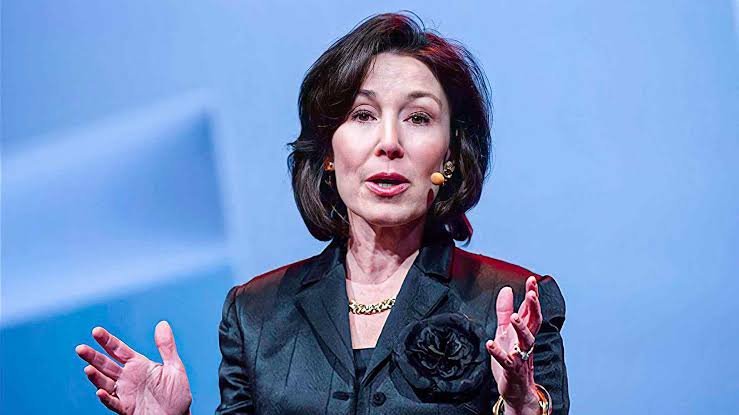
Safra Catz is an Israeli-American business executive best known for her long career at Oracle Corporation, one of the world’s leading enterprise technology companies. She served as Oracle’s Chief Executive Officer (CEO) from September 2014 to September 2025, helping guide the company through major changes in cloud computing, enterprise software, and digital business.
After stepping down as CEO in September 2025, Catz became Executive Vice Chair of Oracle’s Board of Directors. Her career is an example of how financial knowledge, strategic thinking, and strong business leadership can help shape a global technology company.
But who is Safra Catz, how did she build her career, and what can business leaders learn from her success? Here is a closer look at her life, education, career journey, and professional legacy.
Who Is Safra Catz?
Safra Ada Catz is an Israeli-American business professional who built her reputation through investment banking and executive leadership. She joined Oracle in 1999 and gradually moved into senior management positions.
During her time at Oracle, she served as Senior Vice President, Executive Vice President, President, Chief Financial Officer (CFO), and eventually CEO. These roles gave her experience in financial management, business operations, acquisitions, and long-term corporate planning.
As of 2026, Catz serves as Oracle’s Executive Vice Chair. Although she is no longer the company’s CEO, she remains connected to its strategic direction through her board leadership.
Early Life and Education
Safra Catz was born in Israel in December 1961 and moved to the United States during childhood. She later studied at the University of Pennsylvania, where she earned a bachelor’s degree through the Wharton School in 1983.
She continued her education at the University of Pennsylvania Law School, earning a law degree in 1986.
Her combination of business and legal education helped provide a foundation for understanding financial decisions, corporate agreements, negotiations, and business strategy. These skills later became valuable in her work with large companies and complex transactions.
How Safra Catz Started Her Career
Before joining Oracle, Catz worked in investment banking at Donaldson, Lufkin & Jenrette (DLJ). She joined the financial services firm in 1986 and eventually became a managing director.
Her work involved financial transactions and the technology industry. This experience helped her understand how companies raise capital, evaluate investments, negotiate deals, and manage financial risks.
In 1999, she joined Oracle as a Senior Vice President. At that time, Oracle was already an important name in enterprise databases and business software.
Catz’s financial background and business experience made her a valuable member of Oracle’s leadership team. Over time, she took on greater responsibility and became involved in major corporate decisions.
Safra Catz’s Journey at Oracle
Catz’s rise at Oracle was the result of years of experience across different executive roles.
In 2004, she became President of Oracle. She also served as Chief Financial Officer during different periods, including from 2011 to 2014.
In September 2014, Oracle appointed Catz and Mark Hurd as joint CEOs after co-founder Larry Ellison stepped down from the role. Following Hurd’s death in 2019, Catz continued as Oracle’s sole CEO.
During her leadership, Oracle worked to strengthen its position in cloud infrastructure, enterprise applications, database services, and subscription-based software.
Her responsibilities included managing business operations, financial performance, corporate strategy, and major commercial decisions. Her leadership helped Oracle continue competing in a technology market that was changing rapidly.
Safra Catz and Oracle’s Acquisition Strategy
One important part of Catz’s business career was her involvement in corporate acquisitions. Acquisitions allow companies to purchase other businesses to gain technology, products, customers, or market access.
Oracle has acquired numerous companies over the years to expand its software portfolio and strengthen its position in enterprise technology. Catz played a significant role in Oracle’s acquisition strategy and the financial and business negotiations surrounding these deals.
Such transactions require careful planning. Companies must evaluate costs, business risks, potential benefits, and how the acquired business will fit into existing operations.
Catz’s background in investment banking was particularly useful in this area. Her experience illustrates how financial expertise can support growth in the technology industry.
Her Role in Cloud Computing and Enterprise Technology
Cloud computing became one of the most important areas of competition for major technology companies during Catz’s time as CEO.
Instead of relying only on software installed on local computers or company-owned servers, businesses increasingly began using online infrastructure, databases, and applications.
Oracle expanded its cloud services to serve organizations that needed secure data storage, computing power, business applications, and database management. It also continued developing its enterprise software business while competing with other major cloud providers.
The growth of artificial intelligence further increased demand for computing infrastructure and data services. Oracle’s investments in cloud infrastructure positioned the company to compete in this changing environment.
Catz’s leadership period coincided with these major industry developments. Oracle’s technological achievements involved the work of many engineers, product teams, and executives, but her role in corporate strategy and operations was an important part of the company’s direction.
Safra Catz’s Leadership Style
Safra Catz is widely associated with a direct, analytical, and results-focused approach to business leadership. Her financial background helped her focus on business performance, operational efficiency, and the commercial value of major decisions.
Her career highlights several important leadership principles:
- Financial discipline: Understand costs, revenue, profitability, and business risks before making major decisions.
- Strategic planning: Build a long-term business direction rather than focusing only on short-term results.
- Negotiation skills: Evaluate business opportunities carefully and understand the terms of important agreements.
- Adaptability: Respond to changes in technology, customer needs, and industry competition.
- Accountability: Measure business performance and take responsibility for decisions.
These principles can be useful for entrepreneurs, managers, and professionals who want to develop their leadership skills.
Why Did Safra Catz Step Down as Oracle CEO?
In September 2025, Catz stepped down as Oracle’s CEO as part of the company’s planned leadership transition. She became Executive Vice Chair of the Board of Directors.
Oracle appointed Clayton Magouyrk and Michael Sicilia as co-CEOs, placing leadership responsibilities with executives who had experience in cloud infrastructure and industry-specific applications.
The transition reflected Oracle’s succession planning as the company continued expanding in cloud computing and artificial intelligence. Catz remained involved at the board level, allowing Oracle to retain her experience and institutional knowledge.
Her departure from the CEO position marked the end of an important chapter in Oracle’s leadership history, rather than a complete departure from the company.
Safra Catz’s Professional Influence Beyond Oracle
Catz’s experience extends beyond her executive roles at Oracle. Her professional background includes service on the boards of other major organizations.
She has served on the board of The Walt Disney Company and has held a board position at Paramount Skydance. Oracle also identifies her as a lecturer at Stanford Graduate School of Business and a leader associated with the Oracle Education Foundation.
These activities demonstrate the value of executive experience across different industries, including technology, entertainment, education, and corporate governance.
Her career also represents the growing influence of women in senior leadership positions in the global technology industry.
What Can Entrepreneurs Learn From Safra Catz?
Safra Catz’s career offers useful lessons for people building businesses or pursuing management positions.
First, build a strong foundation. Her education in business and law, followed by years in investment banking, helped prepare her for complex executive responsibilities.
Second, learn how money moves through a business. Revenue alone does not guarantee success. Understanding profitability, investment, cash flow, and risk is essential.
Third, develop negotiation skills. Whether managing suppliers, investors, employees, or business partners, clear negotiation can help create better outcomes.
Fourth, keep learning. Technology companies must adapt as customer expectations and market conditions change. Business leaders need to understand these developments and respond effectively.
Finally, focus on long-term value. Sustainable business growth depends on strong products, customer trust, capable teams, and responsible financial decisions.
Conclusion
Safra Catz built an influential career through a combination of financial expertise, strategic thinking, and years of executive experience at Oracle. From investment banking to becoming one of the most prominent leaders in enterprise technology, her professional journey demonstrates the importance of preparation, adaptability, and business knowledge.
As Oracle’s former CEO and current Executive Vice Chair, Catz remains an important figure in the company’s corporate history. Her experience provides useful lessons for entrepreneurs, technology professionals, and future business leaders who want to understand how global companies are managed and transformed.

1 Comment
Pingback: Cara Delevingne: From Supermodel to Hollywood Star – Her Inspiring Journey - Women’s Mag | Fashion, Beauty, Wellness & Women’s Stories