


Build Strength While Staying Aligned and Balanced
Introduction: Strength Without Strain
Pilates isn’t just about flexibility or slow movement—it’s a highly effective strength-training method that builds muscle while improving alignment, control, and balance. Unlike traditional workouts that can overload joints, Pilates focuses on controlled resistance, core stability, and precise movement patterns.
The result: a stronger body that moves better, feels balanced, and stays injury-resistant.
What Makes Pilates a Strength Workout?
Controlled Resistance and Time Under Tension
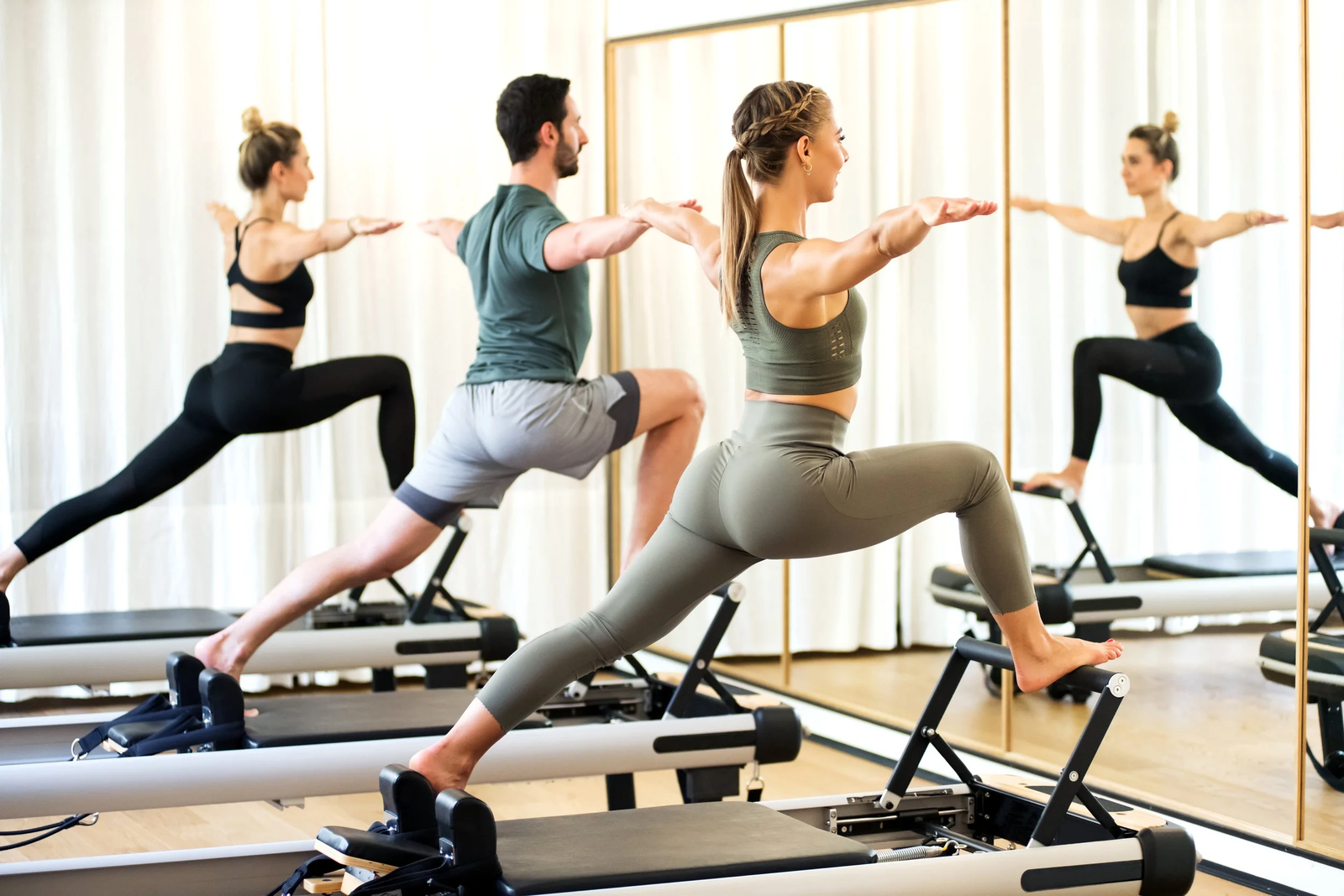
Pilates uses bodyweight, resistance bands, or reformer machines to create strength through slow, controlled movements. This increases time under tension, which is essential for building lean muscle.
Core-Centric Training
Every movement in Pilates originates from the core—often referred to as the “powerhouse.” This includes:
- Abdominals
- Lower back
- Hips and glutes
A strong core improves posture, stability, and overall strength output.
Alignment First Approach
Pilates emphasizes proper alignment:
- Neutral spine
- Engaged core
- Balanced muscle activation
This ensures strength is built evenly across the body, reducing imbalances.
20-Minute Pilates Strength Routine
1. The Hundred (Core Activation)
- Lie on your back, legs lifted
- Pump arms up and down
- Inhale for 5 counts, exhale for 5
Focus: Core engagement and breath control
2. Glute Bridge (Lower Body Strength)
- Feet flat, lift hips upward
- Squeeze glutes at the top
- Lower slowly
Focus: Glutes, hamstrings, pelvic stability
3. Single-Leg Stretch (Core + Coordination)
- Alternate pulling knees toward chest
- Keep core tight and controlled
Focus: Deep core and coordination
4. Side-Lying Leg Lifts (Hip Stability)
- Lift top leg slowly
- Keep hips stacked and aligned
Focus: Hip strength and balance
5. Plank Hold (Full Body Strength)
- Maintain a straight line from head to heels
- Engage core and glutes
Focus: Total-body strength and endurance
6. Swan (Back Strength)
- Lie face down, lift chest gently
- Keep neck neutral
Focus: Spine extension and upper back strength
7. Roll-Up (Core Control)
- Slowly roll up from lying to seated
- Control every inch of movement
Focus: Core strength and spinal articulation
Key Principles for Better Results
1. Quality Over Quantity
Pilates is not about reps—it’s about precision. Fewer, well-executed movements are more effective than high repetitions.
2. Breath Control
Breathing supports movement and core activation. Inhale to prepare, exhale during effort.
3. Slow Down
Slower movements increase muscle engagement and improve control.
4. Stay Aligned
Always maintain neutral spine and proper posture to avoid strain.
Benefits of Pilates Strength Training
- Builds lean, functional muscle
- Improves posture and alignment
- Enhances balance and coordination
- Reduces risk of injury
- Strengthens deep stabilizing muscles
Common Mistakes to Avoid
- Rushing through exercises
- Ignoring alignment
- Holding your breath
- Overarching the lower back
- Letting momentum take over
Conclusion: Strength That Feels Good
Pilates strength training is about more than building muscle—it’s about creating a body that is strong, stable, and aligned. By focusing on control, balance, and precision, you develop strength that supports everyday movement and long-term health.
FAQ: Pilates Strength Workout
1. Can Pilates really build strength?
Yes, Pilates builds functional strength, especially in the core and stabilizing muscles.
2. How often should I do Pilates?
3–4 times per week is ideal for noticeable results.
3. Is Pilates better than weight training?
They serve different goals—Pilates focuses on alignment and control, while weight training emphasizes muscle mass.
4. Do I need equipment?
No, many effective Pilates workouts use just bodyweight.
5. Is Pilates good for beginners?
Yes, it’s low-impact and adaptable for all fitness levels.
